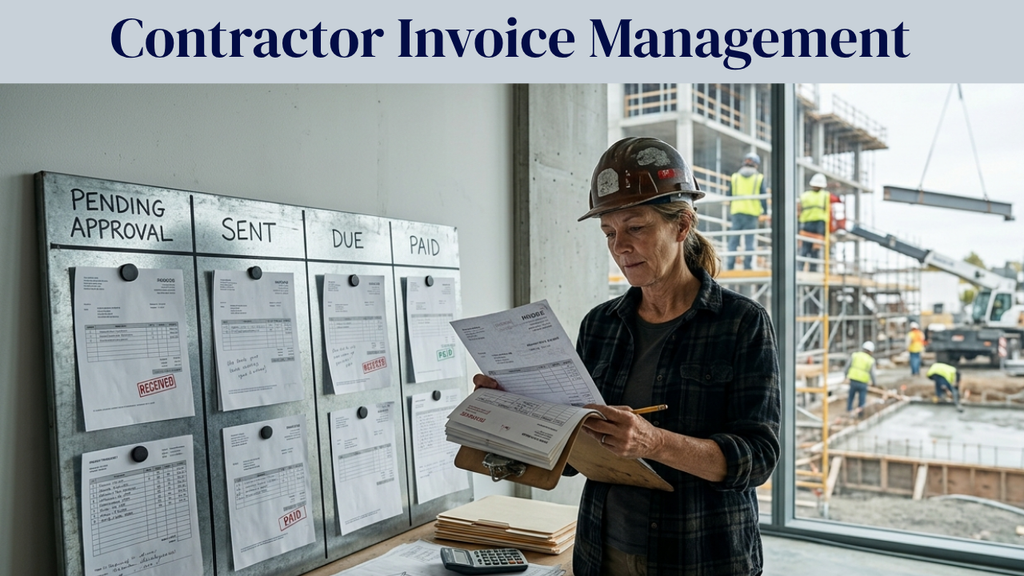

For contractors, completing a project does not always mean the money has reached the bank account.
A business may have multiple completed jobs, invoices sent to customers, and a strong project pipeline while still experiencing financial pressure because a significant amount of money remains unpaid.
This is where accounts receivable management for contractors becomes essential.
Accounts receivable represents the money that customers, clients, property owners, or other responsible parties owe your business for completed work, materials, services, or project milestones.
Without a clear process for tracking and managing those outstanding balances, contractors can lose visibility into what is owed, when payments are due, and which accounts require immediate follow-up.
A strong accounts receivable management system helps contractors stay organized, improve payment collection, and maintain healthier cash flow.
What Is Accounts Receivable Management for Contractors?
Accounts receivable management is the process of monitoring money owed to your business and taking the necessary steps to collect payments on time.
For contractors, this process can include:
- Creating and sending invoices
- Tracking invoice due dates
- Monitoring outstanding balances
- Recording partial payments
- Managing payment reminders
- Following up on overdue invoices
- Resolving billing disputes
- Maintaining project documentation
- Reviewing accounts receivable aging
- Forecasting expected incoming payments
The goal is not simply to know how much money customers owe.
The goal is to create a structured process that helps move outstanding balances toward payment.
Why Accounts Receivable Management Is Important for Contractors
Contractors often have significant expenses that must be paid before customer payments are received.
These may include:
- Payroll
- Materials
- Subcontractor costs
- Equipment expenses
- Vehicle costs
- Insurance
- Permits
- Administrative expenses
- Rent and utilities
When customer payments are delayed, contractors may still need to cover these costs.
For example, a contractor may have $100,000 in outstanding invoices. On paper, that may appear to be strong revenue. However, if much of that amount is overdue, the business may still struggle to pay current expenses.
This is why accounts receivable should be actively managed rather than simply recorded.
Start With Clear Payment Terms
Good accounts receivable management begins before the project starts.
The contract should clearly establish:
- Project price
- Deposit requirements
- Payment milestones
- Invoice schedule
- Payment due dates
- Accepted payment methods
- Change-order billing terms
- Final payment requirements
- Late-payment policies where applicable
Clear payment terms reduce confusion and provide a reference point when following up on unpaid balances.
If expectations are unclear from the beginning, collecting payment can become more difficult later.
Invoice Promptly and Accurately
The accounts receivable process begins when an invoice is issued.
Delaying invoices delays the entire payment cycle.
Once work is completed or a contractual milestone has been reached, the invoice should be prepared and sent promptly.
Before sending it, verify that the invoice includes accurate information such as:
- Customer details
- Project information
- Invoice number
- Invoice date
- Payment due date
- Description of work
- Labor and material costs
- Approved change orders
- Total balance due
- Payment instructions
Errors can cause invoices to be rejected, questioned, or delayed.
A consistent invoice review process helps reduce these problems.
Create a Centralized Accounts Receivable System
One of the biggest challenges contractors face is having payment information spread across multiple locations.
Information may be stored in:
- Accounting software
- Spreadsheets
- Email conversations
- CRM systems
- Project management platforms
- Paper documents
- Individual employee records
When these systems are disconnected, it becomes difficult to get a complete picture of outstanding payments.
A centralized accounts receivable process should allow the business to quickly see:
- Customer name
- Project
- Invoice number
- Invoice amount
- Amount paid
- Remaining balance
- Invoice date
- Due date
- Current status
- Days outstanding
- Last follow-up
- Next action required
The easier this information is to access, the easier it becomes to manage collections.
Track Accounts Receivable Aging
An accounts receivable aging report organizes outstanding balances based on how long they have remained unpaid.
A common structure includes:
Current – Payment is not yet overdue.
1–30 Days Overdue – Payment requires attention and follow-up.
31–60 Days Overdue – The account may require more direct communication.
61–90 Days Overdue – The balance requires stronger attention and escalation.
90+ Days Overdue – The account should be reviewed carefully according to the company’s collection procedures and contractual rights.
Aging reports help contractors prioritize which invoices require immediate attention.
Without this system, a business may focus on recently issued invoices while older balances continue to remain unpaid.
Establish a Consistent Follow-Up Process
Following up on overdue payments should not depend on someone remembering to do it.
Create a standard process.
For example:
Before the due date: Confirm that the customer received the invoice and has all required documentation.
On or near the due date: Send a professional payment reminder.
Shortly after the due date: Contact the customer directly.
As the invoice ages: Increase the level of follow-up according to your internal procedures and contract terms.
Each interaction should be documented.
This prevents duplicate communication and helps the team understand what actions have already been taken.
Record Every Customer Communication
Accounts receivable management is easier when communication history is available in one place.
For each outstanding balance, track:
- Emails sent
- Phone calls
- Payment promises
- Customer questions
- Disputes
- Missing documentation
- Updated payment dates
- Follow-up commitments
For example, if a customer says payment will be made next Friday, that information should be recorded.
Without documentation, another team member may not know what was discussed and may follow up incorrectly or fail to follow up at all.
Identify the Reason Behind Payment Delays
Not every unpaid invoice is overdue for the same reason.
Common causes include:
- Customer has not received the invoice
- Invoice was sent to the wrong person
- Required documents are missing
- Change orders were not approved
- Billing amount is disputed
- Work completion is being questioned
- Internal customer approval is delayed
- Customer is experiencing financial difficulties
Identifying the actual cause can help contractors resolve the issue faster.
Instead of repeatedly sending the same reminder, determine what is preventing payment.
Manage Partial Payments Correctly
Contractors should carefully track invoices that have been partially paid.
For example:
Original invoice: $25,000
Payment received: $15,000
Outstanding balance: $10,000
The invoice should not disappear from the accounts receivable process until the full balance has been resolved.
Tracking partial payments accurately helps prevent remaining balances from being forgotten.
Connect Accounts Receivable With Project Documentation
Payment disputes often require contractors to quickly access project information.
Relevant documents may include:
- Signed contracts
- Estimates
- Approved change orders
- Work completion records
- Photos
- Inspection records
- Purchase orders
- Customer approvals
- Previous invoices
When these records are difficult to locate, resolving payment issues can take longer.
Connecting accounts receivable information with project documentation can improve response times and reduce unnecessary delays.
Monitor Your Average Collection Time
Contractors should understand how long customers typically take to pay.
Review questions such as:
- How many days does it take to collect payment after invoicing?
- Which customers pay consistently on time?
- Which accounts frequently become overdue?
- Which project types have longer approval cycles?
- Are payment delays increasing?
Tracking this information over time can reveal operational issues that may not be obvious when looking at individual invoices.
Set Clear Responsibility for Collections
Outstanding payments can easily be ignored when no one is specifically responsible for monitoring them.
Define who handles:
- Invoice tracking
- Payment reminders
- Customer follow-up
- Updating payment status
- Recording communication
- Resolving documentation issues
- Escalating overdue accounts
The business owner does not have to perform every task, but there should be clear accountability.
A structured workflow helps ensure that no invoice is forgotten.
Review Accounts Receivable Every Week
A weekly accounts receivable review can help contractors stay ahead of payment issues.
Review:
- Total outstanding receivables
- New invoices
- Payments received
- Invoices approaching their due dates
- Recently overdue balances
- Long-outstanding invoices
- Partial payments
- Customer disputes
- Promised payment dates
- Required follow-up actions
This regular review turns accounts receivable management into a proactive process.
Use Automation to Reduce Manual Work
As a contracting business grows, manually tracking every invoice can become difficult.
Automation can help with tasks such as:
- Payment reminders
- Due-date alerts
- Overdue notifications
- Follow-up task creation
- Payment status updates
- Internal collection reminders
Automation does not eliminate the need for human communication, especially when invoices are significantly overdue or disputed.
However, it can reduce the chance that routine follow-ups are forgotten.
Common Accounts Receivable Mistakes Contractors Should Avoid
Contractors often experience collection problems because of avoidable process issues.
Common mistakes include:
- Sending invoices late
- Using unclear payment terms
- Failing to track due dates
- Ignoring accounts receivable aging
- Following up inconsistently
- Not documenting customer communication
- Forgetting about partial balances
- Failing to collect supporting documents
- Allowing too many overdue invoices to accumulate
- Keeping payment information in disconnected systems
A structured process can help eliminate many of these issues.
How ContraCore Can Help Manage Payment Coordination
Managing accounts receivable requires consistent administrative work.
Contractors already spend significant time managing projects, crews, schedules, customers, permits, documentation, and daily operations.
ContraCore helps manage the operational side of contracting businesses, including payment coordination, documentation management, CRM organization, administrative workflows, and follow-up processes.
A structured operational system can help contractors maintain better visibility into:
- Outstanding invoices
- Payment-related tasks
- Follow-up schedules
- Customer communication
- Project records
- Administrative responsibilities
The objective is to help contractors stay organized so important payment-related tasks do not get overlooked while the team focuses on completing projects.
Final Thoughts
Accounts receivable management for contractors is ultimately about maintaining control over the money your business has already earned.
Winning projects and completing quality work are essential, but delayed and unmanaged payments can create unnecessary financial pressure.
By establishing clear payment terms, invoicing promptly, tracking outstanding balances, reviewing aging reports, documenting customer communication, and following up consistently, contractors can create a stronger and more predictable payment process.
The key is to avoid waiting until cash flow becomes a problem.
A proactive accounts receivable system helps contractors identify payment issues early, take appropriate action, and maintain better visibility into the financial health of the business.