For contractors, completing the work is only part of running a profitable business. The other part is making sure the work gets billed correctly and that invoices are paid on time.
A contractor can complete projects successfully and still experience cash flow problems if invoices are sent late, contain errors, lack required documentation, or are not followed up consistently.
This is why contractor invoice management is such an important part of running a construction or contracting business.
A well-organized invoice process helps contractors keep track of what has been billed, what has been paid, what is overdue, and what needs immediate attention. More importantly, it creates a predictable process for turning completed work into collected revenue.
What Is Contractor Invoice Management?
Contractor invoice management is the process of creating, sending, tracking, and following up on invoices related to completed construction or contracting work.
It involves much more than simply creating an invoice.
A complete invoice management process may include:
- Preparing invoices accurately
- Tracking completed work
- Managing progress billing
- Documenting change orders
- Attaching required project documents
- Sending invoices to the correct person
- Monitoring invoice due dates
- Following up on unpaid invoices
- Recording payments
- Resolving invoice disputes
- Tracking accounts receivable
The objective is to make the entire billing process organized and consistent.
Why Contractors Struggle to Get Paid on Time
Payment delays can happen for many different reasons.
Sometimes the customer simply forgets to pay. In other situations, the invoice may not have been submitted correctly or may be missing information required for approval.
Common reasons for delayed contractor payments include:
- Incorrect invoice information
- Missing documentation
- Unapproved change orders
- Unclear payment terms
- Sending invoices to the wrong contact
- Late invoicing
- Poor follow-up
- Disputes over project scope
- Incomplete work
- Incorrect billing amounts
- Complicated approval processes
Many of these problems can be reduced with a better invoice management system.
Create Clear Payment Terms Before the Project Starts
The invoice process starts before the first invoice is ever created.
Your contract should clearly establish how and when the customer will pay.
Important terms may include:
- Deposit requirements
- Progress payment schedules
- Invoice due dates
- Final payment requirements
- Accepted payment methods
- Change-order billing
- Retainage terms when applicable
- Late-payment policies
When payment expectations are clearly established from the beginning, there is less room for confusion later.
Contractors should also make sure their invoice terms match the terms outlined in the contract.
Invoice Immediately When Work Becomes Billable
One of the simplest ways to improve payment speed is to avoid unnecessary delays between completing billable work and sending the invoice.
Consider this process:
Work completed → Invoice prepared → Invoice approved → Invoice sent → Payment received
If the contractor waits two weeks before sending the invoice, the payment cycle has already been delayed before the customer’s payment process even begins.
For milestone-based projects, invoices should be prepared as soon as the applicable milestone has been completed and the contractual billing requirements have been satisfied.
Make Every Invoice Accurate
Invoice errors can create unnecessary payment delays.
Before an invoice is sent, verify:
- Customer name
- Billing address
- Project name
- Project address
- Invoice number
- Invoice date
- Payment due date
- Description of work
- Quantities
- Labor charges
- Material charges
- Approved change orders
- Taxes or applicable charges
- Total amount due
- Payment instructions
Even a small mistake can cause an invoice to be rejected or sent back for correction.
A quick review before sending can save significantly more time later.
Include the Documentation Required for Payment
Some customers and general contractors require specific documentation before approving payment.
If required documents are missing, the invoice may sit in an approval queue even though the work has already been completed.
Depending on the project, documentation may include:
- Signed contracts
- Approved change orders
- Purchase orders
- Progress reports
- Completion records
- Receipts
- Lien waivers
- Inspection documentation
- Photos
- Other project records
Contractors should create a standard documentation checklist for each project type so that invoices are not submitted incomplete.
Keep Change Orders Organized
Change orders are one of the most common sources of billing confusion.
A customer may request additional work, materials, or modifications after the original agreement has been signed.
If the change is not documented properly, the contractor may later have difficulty proving what was requested and what the customer agreed to pay.
A strong change-order process should document:
What changed?
Why did it change?
How much will it cost?
Who approved it?
When was it approved?
When will it be billed?
Once approved, change orders should be tracked through the invoice process so additional work does not become lost revenue.
Send Invoices to the Right Person
Even a perfectly prepared invoice can experience delays if it is sent to the wrong person.
Large construction projects may involve multiple contacts, including:
- Property owners
- Project managers
- General contractors
- Accounting departments
- Bookkeepers
- Purchasing departments
- Accounts payable teams
Before sending an invoice, confirm the correct billing contact and submission method.
Some companies may require invoices through a specific portal or accounting system instead of email.
Following the customer’s required process can prevent unnecessary delays.
Track Invoice Status
Contractors should never have to guess what happened to an invoice after it was sent.
Every invoice should have a clear status, such as:
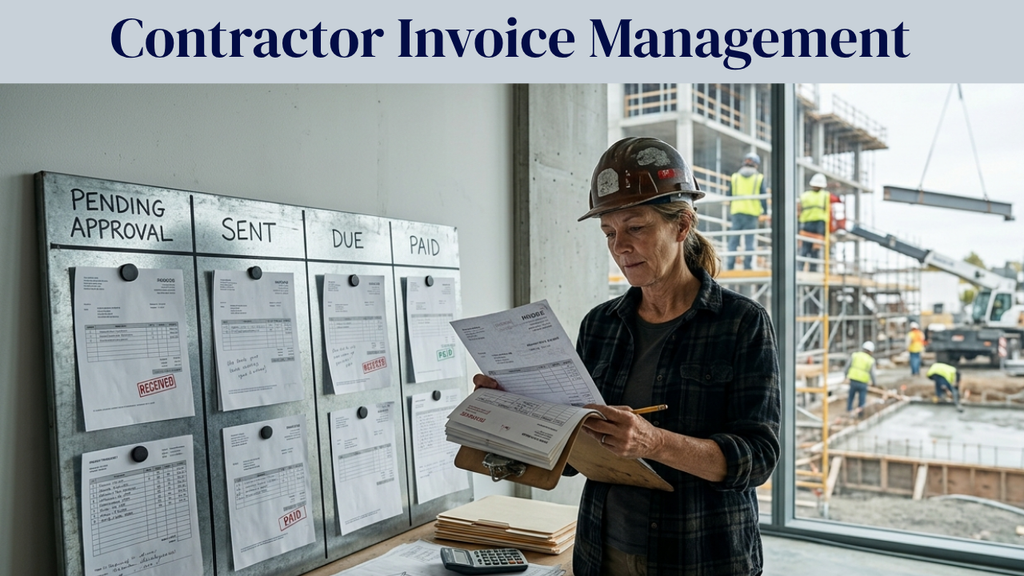
Draft → Sent → Received → Approved → Due → Paid
If payment has not been received, the invoice may be:
Overdue → Follow-Up Required → Disputed → Escalated
Tracking these statuses gives the contractor a clear picture of outstanding receivables.
It also makes it easier for administrative staff to determine which invoices require attention.
Follow Up Before Payment Is Late
Waiting until an invoice is several weeks overdue to follow up can make cash collection more difficult.
A better approach is proactive communication.
For example:
Before the due date: Confirm that the invoice was received.
Near the due date: Send a friendly payment reminder.
After the due date: Contact the customer regarding the outstanding balance.
For seriously overdue invoices: Escalate according to your contractual and internal procedures.
Consistent follow-up helps prevent invoices from being forgotten.
Use Invoice Aging to Prioritize Collections
Not every unpaid invoice requires the same level of attention.
An invoice aging report can help contractors organize receivables into categories such as:
- Current
- 1–30 days overdue
- 31–60 days overdue
- 61–90 days overdue
- 90+ days overdue
Older invoices generally require more immediate attention.
Reviewing invoice aging regularly also helps identify customers or project types that consistently create payment delays.
Automate Routine Invoice Reminders
Manual reminders can easily get missed when contractors and office teams are managing multiple projects.
Automation can make the process more consistent.
A basic reminder workflow could look like:
- Invoice is sent.
- Customer receives confirmation.
- Reminder is scheduled before the due date.
- Payment status is checked on the due date.
- Overdue reminder is triggered if payment has not been received.
- Staff follows up personally when necessary.
Automation should support the team rather than replace professional communication.
The goal is to make sure routine follow-ups happen consistently.
Make Payment Easy for Customers
The easier it is for customers to pay, the fewer unnecessary obstacles exist between an invoice and payment.
Invoices should clearly explain:
- Amount due
- Due date
- Accepted payment methods
- Payment instructions
- Contact information for billing questions
If customers have to search through old emails or contact multiple people to determine how to pay, the process becomes unnecessarily complicated.
A simple, professional payment process can improve the customer experience while helping contractors collect faster.
Keep Project and Invoice Records Together
Contractor invoice management becomes much easier when financial and project information is organized in one system or connected workflow.
Your team should be able to quickly find:
- Contract
- Scope of work
- Change orders
- Project milestones
- Invoice history
- Payment history
- Customer communications
- Supporting documents
This reduces the time required to answer billing questions.
It also makes it easier to resolve disputes because the relevant information is readily available.
Separate Billing Responsibilities When Possible
As a contracting business grows, the owner should not necessarily be responsible for every billing task.
Administrative responsibilities can include:
- Preparing invoices
- Reviewing invoices
- Sending invoices
- Tracking payment status
- Following up with customers
- Maintaining documentation
- Updating accounting records
Delegating these responsibilities allows contractors to spend more time on project management, field operations, and business development.
The key is maintaining clear accountability so invoices do not fall between departments or team members.
Review Unpaid Invoices Every Week
A weekly invoice review can prevent small payment issues from becoming major cash flow problems.
During the review, check:
- New invoices that need to be sent
- Invoices approaching their due date
- Recently overdue invoices
- Long-outstanding balances
- Disputed invoices
- Missing documentation
- Pending approvals
- Expected payments for the coming weeks
A consistent review process gives contractors better visibility into upcoming cash flow.
Connect Invoice Management With Cash Flow Management
Invoice management and cash flow management are closely connected.
If invoices are delayed, cash flow suffers.
If invoices contain errors, payments can be delayed.
If overdue invoices are not followed up on, outstanding receivables can continue growing.
This means improving invoice management can have a direct impact on the financial health of the business.
Contractors should therefore look at invoicing as part of the overall financial and operational workflow rather than as an isolated accounting task.
Common Contractor Invoice Management Mistakes
Some of the most common mistakes include:
- Waiting too long to invoice
- Using inconsistent invoice formats
- Making billing errors
- Forgetting to bill approved change orders
- Sending invoices without required documents
- Sending invoices to the wrong contact
- Not tracking invoice status
- Failing to follow up on overdue invoices
- Keeping project documents in different locations
- Relying entirely on manual reminders
- Not reviewing accounts receivable regularly
These issues may appear small individually, but together they can create significant delays in collecting revenue.
How Contractor Core Helps Contractors Manage Their Operations
Contractors should be focused on completing projects, managing crews, maintaining quality, and growing their businesses.
Administrative and payment-related tasks can consume valuable time when they are not organized properly.
Contractor Core helps contractors manage important operational processes, including documentation, CRM management, payment coordination, administrative workflows, and other core business functions.
A structured process can help contractors keep project information organized, maintain consistent follow-ups, and improve visibility into billing and payment-related tasks.
The goal is not simply to send invoices faster. It is to create a reliable system where project completion, documentation, invoicing, communication, and payment follow-up work together.
Final Thoughts
Effective contractor invoice management can make a significant difference in how quickly a contracting business gets paid.
The key is to treat invoicing as an ongoing process rather than a task that happens after the work is finished.
Establish clear payment terms, invoice promptly, verify every invoice, document change orders, include required paperwork, track invoice status, and follow up consistently.
When these processes are organized and managed properly, contractors can reduce avoidable payment delays, improve cash flow visibility, and spend more time focusing on the work that drives their business forward.