
Managing a contracting business is about much more than completing projects and winning new customers. A contractor can have a full schedule, profitable projects, and strong sales while still struggling financially because payments are arriving too slowly.
This is where contractor cash flow management becomes critical.
Cash flow represents the money moving into and out of your business. When customers, general contractors, or project owners delay payments while payroll, materials, subcontractors, insurance, and other expenses still need to be paid, your business can quickly experience financial pressure.
The good news is that better cash flow does not always require more projects. In many cases, contractors can improve their financial position by managing invoices, payment schedules, contracts, documentation, and accounts receivable more efficiently.
Here are practical strategies contractors can use to get paid faster, control expenses, and maintain healthier cash flow.
What Is Contractor Cash Flow Management?
Contractor cash flow management is the process of monitoring, organizing, and controlling the money entering and leaving a contracting business.
For contractors, cash flow can be more complicated than it appears because projects often involve:
- Deposits and progress payments
- Retainage
- Material purchases
- Subcontractor payments
- Payroll
- Change orders
- Permits and project documentation
- Insurance and operating expenses
- Delayed customer payments
- Different payment schedules for different projects
A business may technically be profitable on paper but still lack enough available cash to cover current obligations.
Effective cash flow management helps contractors understand when money is expected to arrive, when expenses are due, and where payment bottlenecks are occurring.
Why Cash Flow Problems Are Common in Contracting
Construction and contracting businesses often operate on a delayed payment cycle.
A contractor may purchase materials today, pay workers this week, complete part of a project next month, submit an invoice afterward, and then wait several more weeks before receiving payment.
That creates a gap between expenses and revenue.
For example, imagine a contractor completes $50,000 worth of work during a month. If the customer does not pay the invoice for another 30 or 60 days, the contractor still needs to cover payroll, suppliers, fuel, insurance, equipment, and other expenses in the meantime.
The larger the business becomes, the more important this becomes.
More projects can mean more revenue, but they can also mean more upfront expenses and larger amounts of money tied up in unpaid invoices.
Create Clear Payment Terms Before Work Begins
One of the easiest ways to improve contractor cash flow is to establish clear payment expectations before the project starts.
Your contract should clearly explain:
- Total project price
- Deposit requirements
- Payment milestones
- Invoice due dates
- Accepted payment methods
- Change-order payment terms
- Late-payment policies
- Retainage terms when applicable
- Final payment requirements
Do not assume customers understand when payment is expected.
A clearly documented payment schedule reduces confusion and gives your team something concrete to reference when an invoice becomes overdue.
The goal is simple: make payment expectations clear before money becomes an issue.
Invoice as Soon as Work Is Billable
One of the biggest cash flow mistakes contractors make is waiting too long to send invoices.
If work has been completed and the contract allows you to bill for it, delaying the invoice only delays the opportunity to receive payment.
For example:
Work completed → Invoice sent → Customer review → Payment
Every unnecessary delay in the invoicing process can push the entire payment cycle further into the future.
Contractors should establish an internal process for identifying billable work and sending invoices promptly.
This is especially important for progress billing. If invoices are sent several days or weeks after a milestone is completed, the contractor effectively creates an avoidable cash flow gap.
Track Accounts Receivable Closely
Accounts receivable represents money customers owe your business.
Simply knowing your total accounts receivable balance is not enough. You should know:
- Which invoices are outstanding
- How much each customer owes
- When each invoice was issued
- When payment is due
- How many days the invoice is overdue
- Who is responsible for following up
- Whether there are documentation issues delaying payment
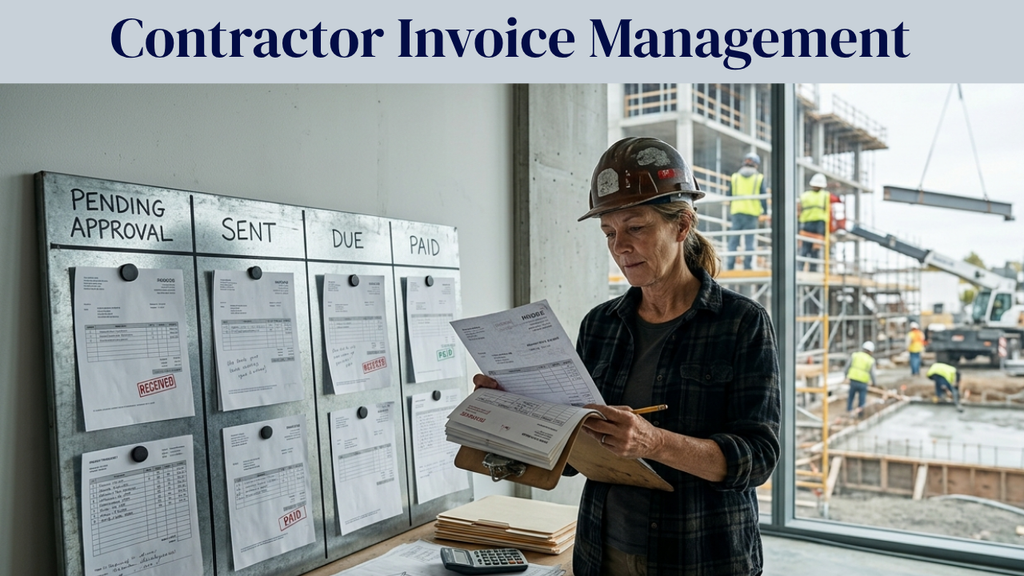
A simple aging system can help categorize invoices:
Current: Payment is not yet due.
1–30 days overdue: Follow up promptly.
31–60 days overdue: Escalate the collection process.
60+ days overdue: Review the account and determine the appropriate next action.
The sooner your team identifies overdue invoices, the easier it is to address them.
Follow Up Before an Invoice Becomes Overdue
Waiting until an invoice is significantly overdue before contacting a customer can make collections harder.
Instead, establish a proactive communication process.
For example:
Before the due date: Confirm that the customer received the invoice.
Around the due date: Send a payment reminder.
Shortly after the due date: Contact the customer regarding the outstanding balance.
For significantly overdue invoices: Escalate the issue according to your contract and internal procedures.
Professional follow-up does not have to be aggressive. Consistent communication simply keeps invoices from disappearing into someone’s inbox.
Make Sure Your Documentation Is Complete
Payment delays are not always caused by customers refusing to pay.
Sometimes invoices are delayed because required documentation is missing.
Depending on the project, payment may depend on documents such as:
- Signed contracts
- Approved change orders
- Purchase orders
- Completion documentation
- Receipts
- Lien waivers
- Permits
- Inspection records
- Progress reports
- Photos
- Other project-specific documents
If your invoice is submitted without the information required by the customer or general contractor, payment may be delayed while someone requests additional documentation.
A strong documentation process can therefore become an important part of cash flow management.
Control Change Orders
Change orders can create significant cash flow problems when they are not documented and approved properly.
A contractor may perform additional work because the customer requested it, only to discover later that the additional cost was never formally approved.
That can create disputes over:
- Labor
- Materials
- Project scope
- Additional costs
- Completion dates
- Payment responsibility
Whenever possible, document and obtain approval for changes before performing additional work.
A clear change-order process protects the contractor and makes it easier to invoice additional work correctly.
Separate Project Profitability From Cash Flow
Profitability and cash flow are related, but they are not the same thing.
A project can be profitable while still creating a temporary cash shortage.
For example, a contractor may expect a $30,000 payment from a profitable project but have $20,000 in expenses due before that payment arrives.
The project is profitable, but the timing of the cash creates a problem.
Contractors should therefore monitor both:
Project profitability: Are we making money on this job?
Cash flow: Do we have enough available cash to meet upcoming obligations?
Looking at both metrics provides a more accurate picture of business health.
Build a Cash Flow Forecast
A cash flow forecast helps contractors look ahead rather than simply reacting to financial problems.
Your forecast should estimate:
Expected cash coming in:
- Customer payments
- Deposits
- Progress payments
- Final payments
- Other business income
Expected cash going out:
- Payroll
- Materials
- Subcontractors
- Equipment
- Insurance
- Rent
- Taxes
- Software
- Marketing
- Vehicle expenses
- Other operating costs
A rolling forecast can help identify potential cash shortages before they happen.
For example, if several large supplier payments are due next month but multiple customer invoices are not expected to be paid until the following month, you can identify the gap early and plan accordingly.
Avoid Taking on Too Many Projects at Once
Growth is exciting, but rapid growth can create cash flow problems.
Suppose a contractor takes on five new projects at the same time. Each project requires materials, labor, subcontractors, equipment, and administrative resources.
Revenue may eventually increase, but the business may need to spend a significant amount of money before those projects generate corresponding payments.
This is why contractors should evaluate the financial requirements of new projects before accepting them.
A larger backlog is not automatically better if the business does not have the working capital and operational systems required to support it.
Negotiate Better Supplier and Subcontractor Terms
Your outgoing cash flow also deserves attention.
Contractors should review payment terms with suppliers and subcontractors and understand how those terms align with customer payment schedules.
For example, if a customer pays 30 days after invoicing but a supplier requires payment immediately, the contractor may need to finance that gap.
Where possible, negotiate terms that better match the project’s cash cycle.
The objective is not to delay legitimate payments. It is to create a more predictable relationship between money coming into the business and money going out.
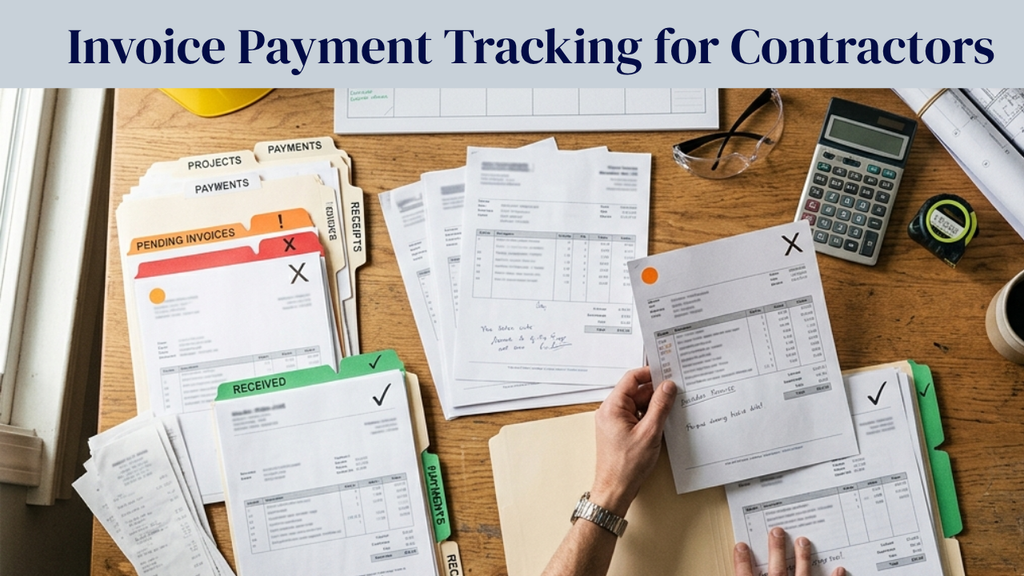
Use a Centralized Payment Management System
Contractors often manage information across emails, spreadsheets, accounting software, CRM systems, documents, and text messages.
When information is scattered, it becomes easier to miss:
- An invoice
- A payment deadline
- A change order
- A customer follow-up
- A required document
- An outstanding balance
Centralizing important project and payment information can significantly improve visibility.
Your team should be able to quickly determine:
What has been completed?
What has been invoiced?
What has been paid?
What is overdue?
What needs follow-up?
What documentation is still missing?
Better organization can reduce administrative delays that ultimately affect cash flow.
Automate Payment Reminders
Manual payment follow-ups can consume significant administrative time, particularly as the number of projects increases.
Automated reminders can help ensure customers receive timely notifications about upcoming and overdue payments.
A simple workflow might include:
- Invoice is created.
- Invoice is sent to the customer.
- Confirmation is recorded.
- Reminder is scheduled before the due date.
- Overdue reminder is triggered if payment is not received.
- Staff member follows up on unresolved invoices.
Automation does not replace human communication. Instead, it helps ensure that routine follow-ups do not get forgotten.
Know Your Cash Conversion Cycle
Contractors should understand how long it typically takes to turn project expenses into collected revenue.
Consider the sequence:
Purchase materials → Perform work → Complete milestone → Submit invoice → Customer approval → Receive payment
The longer this process takes, the more working capital your business may need.
Tracking your average payment cycle can reveal opportunities to improve.
If customers typically take 45 days to pay, but your business pays suppliers within 15 days, you have a significant timing gap.
Reducing that gap can improve cash flow without increasing sales.
Maintain an Emergency Cash Reserve
Even well-managed contracting businesses can experience unexpected delays.
A customer may dispute an invoice. A project may be delayed. Equipment may fail. A major expense may appear unexpectedly.
Maintaining an appropriate cash reserve gives your business more flexibility when these situations occur.
The exact amount depends on your business size, expenses, project structure, and risk level, but the principle is straightforward:
Do not operate as if every expected payment will arrive exactly on time.
Planning for delays can make your business more resilient.
Review Cash Flow Every Week
Cash flow management should not be something you look at only when there is a problem.
A weekly review can help you stay ahead of issues.
Review:
- Current bank balance
- Outstanding invoices
- Upcoming payments
- Overdue accounts
- Expected customer payments
- Payroll obligations
- Supplier bills
- Project expenses
- Upcoming large purchases
- Potential cash shortages
A consistent weekly review can take far less time than trying to solve a serious cash flow crisis later.
Common Contractor Cash Flow Mistakes
Many cash flow problems come from small administrative issues that compound over time.
Common mistakes include:
- Sending invoices late
- Not following up on overdue invoices
- Accepting unclear payment terms
- Performing undocumented extra work
- Failing to track change orders
- Mixing project and business expenses
- Ignoring accounts receivable aging
- Not forecasting upcoming expenses
- Taking on projects without considering working capital
- Losing track of required project documentation
- Relying entirely on spreadsheets and manual processes
Identifying these weaknesses is the first step toward improving financial control.
How Contractor Core Can Help With Cash Flow Management
Contractors should be focused on completing quality work and keeping projects moving. Administrative tasks should not constantly pull attention away from operations.
Contractor Core helps contractors manage the operational side of their businesses, including administrative processes, documentation, CRM management, payment coordination, and other core business functions.
Instead of allowing invoices, documentation, customer follow-ups, and administrative tasks to become scattered across different systems, a structured management process can help contractors maintain better visibility and control.
The objective is not simply to send more invoices. It is to create a system where work, documentation, billing, communication, and follow-up work together.
Better organization can help contractors:
- Reduce administrative delays
- Track payment-related tasks
- Keep project information organized
- Improve follow-up consistency
- Maintain better visibility into outstanding payments
- Spend more time focusing on field operations and revenue-producing work
Final Thoughts
Contractor cash flow management is essential for building a financially stable contracting business.
Getting more projects does not automatically solve cash flow problems. Contractors need systems that help them invoice promptly, track accounts receivable, manage documentation, control change orders, forecast expenses, and follow up on payments consistently.
The goal is to create a predictable financial cycle where money comes into the business fast enough to support the expenses required to keep projects moving.
When contractors manage cash flow proactively instead of reacting to overdue payments and unexpected expenses, they can improve financial stability, reduce unnecessary stress, and create a stronger foundation for sustainable growth.
For contractors, getting paid faster is not just about collecting money. It is about building a business system that makes timely payment easier, more predictable, and easier to manage.